


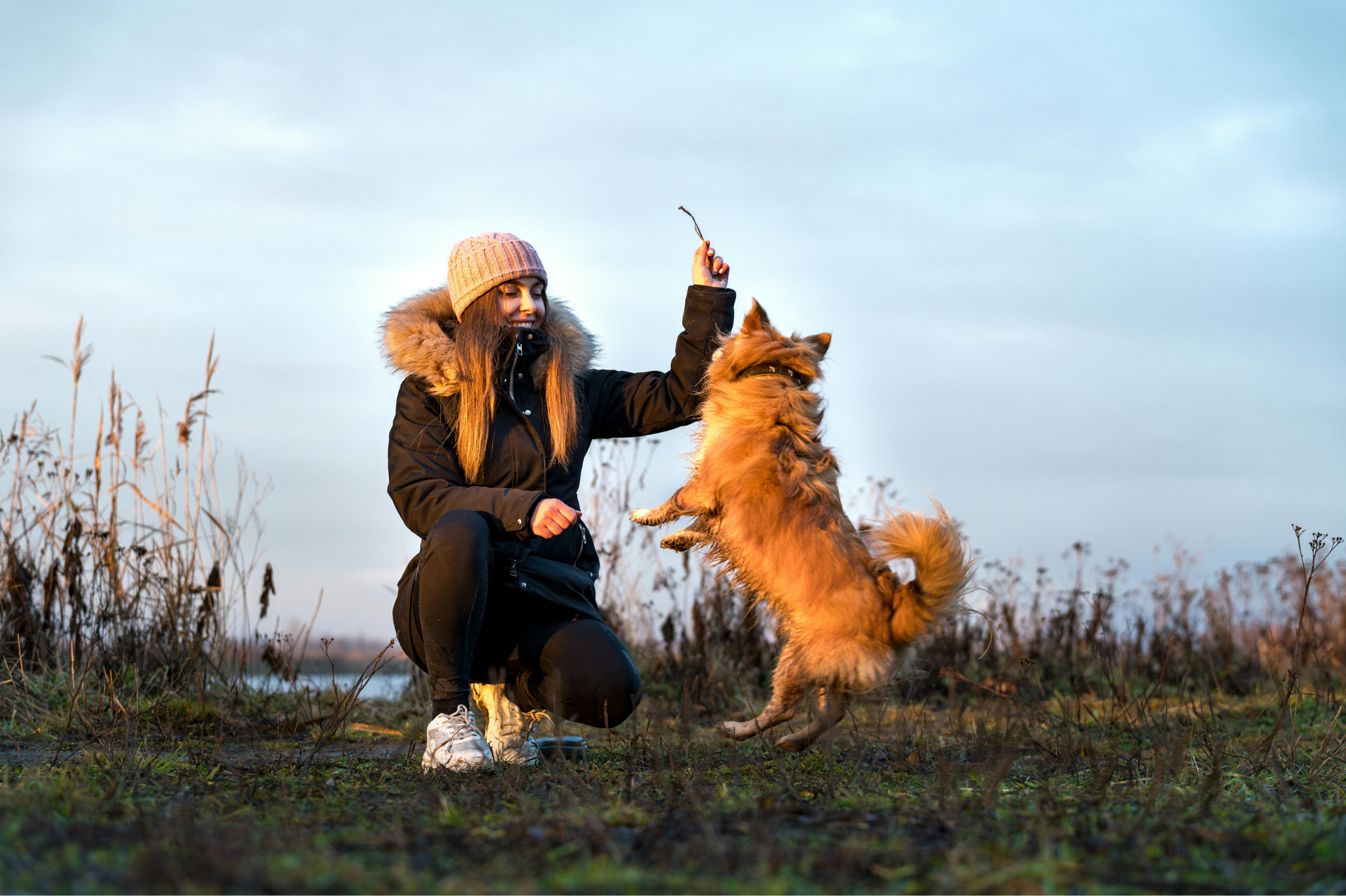
Dogs bring plenty of love and laughter into our lives, but training them isn’t always easy. From pulling on the leash to jumping on guests, some behaviors can leave even experienced dog owners wondering what to do next.
So, should you hire a dog trainer? For many dog owners, professional training can be a worthwhile investment in a happier, safer relationship with their pet.
7 Signs Your Dog Could Benefit From Training
1. Your dog struggles with basic commands. If your dog has trouble learning cues like sit, stay, or come, a trainer can help you build consistent training habits.
2. Walks have become stressful. Pulling on the leash, ignoring recall, or reacting to distractions may improve with a structured training plan.
3. Your dog jumps on people. A trainer can teach alternative greetings and help you reinforce calmer behavior.
4. Your puppy needs a good start. Puppy classes can introduce foundational skills, socialization opportunities, and positive training techniques.
5. Your dog has trouble being alone. A qualified professional can help assess the situation and recommend appropriate next steps. Separation anxiety may require specialized treatment.
6. You’re dealing with unwanted behaviors. Persistent barking, destructive behavior, or difficulty settling may benefit from training—but it’s important to rule out medical or environmental causes when appropriate.
7. You’re feeling frustrated. You don’t have to wait until a problem becomes serious. A trainer can help you understand your dog’s behavior and create a realistic plan for your household.
Is Hiring a Dog Trainer Worth the Money?
Professional dog training can save time, improve communication, and help you develop more consistent habits with your dog.
Group classes may be a good option for basic obedience and practicing around distractions. Private sessions can provide more individualized guidance, while specialized behavior professionals may be appropriate for more complex concerns.
Training costs vary by location, experience, and program. Before booking, ask about pricing, credentials, training methods, and what support is included between sessions.
Look for a trainer who uses humane, evidence-informed methods, including positive reinforcement. Avoid professionals who rely on intimidation or promise guaranteed results.
Can You Train Your Dog Yourself?
Absolutely. Many dogs learn foundational skills through consistent practice at home.
Short training sessions, rewards, patience, and clear cues can go a long way. However, professional help may be valuable when progress stalls, behavior creates safety concerns, or you need guidance tailored to your dog’s needs.
If your dog suddenly develops a behavior change, consult your veterinarian to rule out possible medical causes. For aggression, severe fear, or other serious behavior concerns, seek qualified professional help rather than attempting to manage the situation alone.
The Bottom Line: Is a Dog Trainer Right for You?
Hiring a dog trainer isn’t a sign that you’ve failed as a dog parent. It’s one way to invest in your dog’s well-being and your relationship together.
Whether you’re raising a puppy or helping an adult dog develop better habits, the right support can make training more manageable and rewarding.
At Houndestly, we believe better dog parenting starts with understanding your dog’s needs, finding practical solutions, and building a stronger bond one day at a time.
The Silence That Grew Without Us
e silence isn’t empty — it’s full of life finding its voice again. In the hush, the wind speaks louder, the rain sounds truer, and the stars seem closer. What we once called wilderness was never lost; it was only drowned out by our presence. Now, in the stillness we left behind, nature sings in a language we’ve almost forgotten — a reminder that peace has always existed, just beyond the reach of our noise.
The Earth’s Subtle Rebellion
Nature doesn’t fight us in grand, cinematic ways. Its rebellion is quiet — overgrown paths, reclaimed buildings, moss on forgotten walls. It’s the slow and graceful takeover of everything we once tried to control.
What feels like decay to us is renewal to the earth. Life moves forward, reshaping itself in our shadow.
Our Place in a World That No Longer Needs Us
For centuries, we believed the world revolved around our presence. But as the cities slept and skies cleared, nature reminded us that it thrives in stillness. We are not its masters or saviors; we are guests who stayed too long. The balance was never ours to hold — only to respect.

The Illusion of Ownership
We built walls and borders, claimed mountains and oceans, and called them ours. But ownership was always an illusion — the earth cannot be possessed, only shared. Every piece of land we’ve named belongs to a rhythm older than any human map.
The wild doesn’t miss us — it remembers how to be without us.
The Pause That Changed Everything
When the world slowed down — when planes stopped flying, and streets fell silent — something extraordinary happened. Skies turned blue again. Birds returned. Rivers cleared. It was as if nature had been holding its breath, waiting for a moment of quiet to heal itself.
Learning to Belong, Not to Dominate
Maybe our role was never to dominate, but to belong. To live not above nature, but within it. The more we let go of control, the more we realize we’re part of something vast, intricate, and alive — a world that continues beautifully, with or without us.
Relearning the Art of Coexistence
The lesson isn’t about guilt, but humility. To coexist means to listen — to walk softer, to consume less, to remember that beauty doesn’t need our permission to exist. When we finally return, maybe it shouldn’t be to reclaim, but to rejoin — not as conquerors, but as part of something vast and breathing.
Conclusion
When nature stops waiting for us, it’s not an ending — it’s an awakening. The forests will grow, the rivers will sing, and the world will continue its rhythm. The question that remains is whether we’ll learn to walk in tune with it again.


